Viatom Checkme O2 Max Review: Wrist Oxygen Monitor
See their oxygen live on your phone — from anywhere. OxyRemote streams readings with instant low‑oxygen alerts for Wellue, O2Ring & Viatom oximeters, so you don't have to be in the room to keep watch.
Download on the App StoreSome links below are affiliate links. As an Amazon Associate, OxyRemote earns from qualifying purchases at no extra cost to you. Picks and opinions are our own.
If you have been researching overnight oxygen monitors, the Checkme O2 Max keeps coming up — usually right beside the Wellue O2Ring, and often with three different brand names attached. Here is the honest picture of what this wrist-worn monitor is, what it genuinely does better than the ring-style options, where it falls short, and who it actually suits.
What the Checkme O2 Max is
The Checkme O2 Max is a continuous pulse oximeter built for sleep: a small, light unit worn on the wrist like a watch, connected to a soft ring sensor that sits on the thumb or finger. Through the night it records SpO₂, pulse rate, and movement, then hands you the full session as a graph and summary in the morning. One naming note that trips people up: Checkme is a product line of Viatom, which sells to consumers as Wellue — so 'Viatom Checkme O2 Max' and 'Wellue Checkme O2 Max' are the same device, part of the same family as the O2Ring.
What it does well
- Battery is the headline: the manufacturer rates it around 72 hours per charge — several nights of recording without thinking about the charger, where a ring typically needs charging daily.
- It samples frequently (readings roughly every couple of seconds) and stores multiple full sessions on the device, syncing to the app later.
- The vibration motor is stronger than the rings', with an optional audible alarm — useful if a gentle buzz genuinely doesn't wake you.
- The soft thumb-ring sensor spreads the fit across wrist and thumb, which some sleepers find more comfortable than a rigid ring with electronics on the finger.
- It works with the same free ViHealth app and PC reporting as the rest of the Wellue family, with exportable reports for a clinician.
The honest trade-offs
- It is more to wear than a ring: a wrist unit plus a sensor tethered to your thumb. Restless sleepers who dislike anything on the wrist should try a ring first.
- The morning report is the product — if what you really want is live remote viewing for a family member, you'll add an app layer for that (more below).
- Like every consumer oximeter, it is a wellness and screening tool, not a medical device — it observes trends; it does not diagnose.
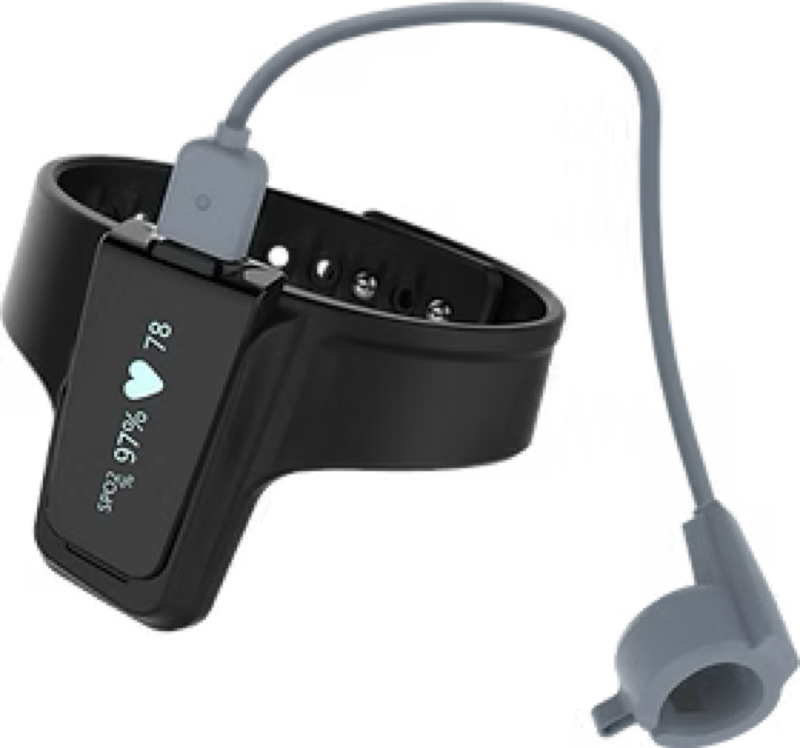
Viatom Checkme O2 Max
Works with OxyRemoteThe pick for multi-night recording: a wrist-worn monitor with a soft thumb-ring sensor, several nights of battery, and detailed exportable reports — best for people who found rings uncomfortable or hate daily charging.
Best for: Multi-night overnight recording without daily charging
- Manufacturer-rated ~72-hour battery covers several nights per charge
- Frequent sampling with multiple sessions stored on-device
- Stronger vibration plus an optional audible alarm
- Same free ViHealth app and PC reports as the rest of the Wellue family
- Wrist unit plus thumb sensor is more to wear than a simple ring
- A consumer wellness device, not a diagnostic or medical alarm
- No live remote view on its own — that takes a companion app
Checkme O2 Max vs the O2Ring
The short version: the O2Ring wins on simplicity and sleep comfort for most people — one small ring, nothing on the wrist. The O2 Max wins on battery, alarm strength, and multi-night stamina. If you are still weighing the family against each other, our O2Ring vs SleepU vs Checkme O2 Max comparison puts them side by side in more detail, and O2Ring vs O2Ring S covers the two ring generations specifically.
Using it for remote monitoring
Out of the box, the O2 Max is a record-then-review device: the wearer (or whoever picks up their phone) sees the data. If you are monitoring someone else — a parent in another home, a partner whose breathing worries you — an app layer like OxyRemote reads the same device over Bluetooth and streams the readings to your phone live, with an alert when oxygen drops below a range you set. What to look for in that layer is covered in choosing a remote pulse oximeter app, and if your goal is a structured look at a few nights of data, see the overnight pulse oximetry test guide.
What this device is — and isn't
The Checkme O2 Max is a consumer wellness monitor: excellent for observing overnight oxygen trends and gathering data worth showing a clinician, but not a diagnostic device or a medical alarm. Do not use it to rule conditions in or out, and never change prescribed therapy based on its readings. Concerning numbers or symptoms belong in front of a healthcare professional.
The bottom line
The Checkme O2 Max is the endurance option in the Wellue/Viatom lineup: pick it if multi-night battery, a stronger alarm, or a ring-free finger matter more to you than minimal hardware. Pick the O2Ring if you want the simplest, most sleep-friendly setup. Either way you get the same app family, exportable reports, and — with a remote layer on top — live visibility for the people who worry about you. Prices and availability shift, so check the current listing before you buy.
Watch over them from anywhere
OxyRemote streams live SpO₂ and heart rate to your phone, with custom alerts — using a supported Bluetooth pulse oximeter.
Download on the App Store