Best Bluetooth Pulse Oximeters 2026: Continuous & Remote
See their oxygen live on your phone — from anywhere. OxyRemote streams readings with instant low‑oxygen alerts for Wellue, O2Ring & Viatom oximeters, so you don't have to be in the room to keep watch.
Download on the App StoreSome links below are affiliate links. As an Amazon Associate, OxyRemote earns from qualifying purchases at no extra cost to you. Picks and opinions are our own.
A Bluetooth pulse oximeter is no longer just a gadget that shows a number on a screen. In 2026, the devices worth buying do three things a basic clip-on cannot: they record your oxygen over time, they sync to an app so you can look back at trends, and the better ones can alert you the moment your oxygen dips below a level you care about.
That last part is what most buyers are really after. People shopping for these devices usually want one of two things: to be told when their oxygen drops, especially during sleep, or to let a family member keep an eye on a loved one from another room or another house. The hardware is only half of the answer; the app and the alerts are the other half.
Before the ranking, it helps to understand the single biggest split in this category.
Continuous vs spot-check: the most important choice
There are two broad styles. Continuous monitors — usually a ring or a wrist unit with a soft finger sensor — are worn for hours and record a reading every few seconds. They are what you want for overnight tracking, suspected sleep apnea, or following oxygen trends through the night, because the dips that matter often happen briefly while you sleep and a single snapshot would miss them.
Spot-check devices are the familiar fingertip clips. You put one on, wait a few seconds, read the number, and take it off. They are inexpensive and instant, but they are not built to be worn all night and they cannot capture overnight patterns. For the difference explained in more depth, see spot-check vs continuous pulse oximeter.
How we picked
- Comfort for all-night wear — a device only helps overnight if you can actually sleep in it, which is why soft rings and silicone sensors rank above hard fingertip clips for continuous use.
- Continuous recording — the ability to log SpO2 and heart rate across a full session and store it on-device, not just flash a momentary number.
- Reliable Bluetooth sync — readings that move cleanly from the device to a phone app without constant dropouts or fiddly re-pairing.
- App ecosystem — a mature, well-supported app with saved history and exportable reports (PDF/CSV) you can show a clinician.
- Remote viewing and alerts — vibration or audio nudges when oxygen drops, and the option for someone else to follow the readings live.
We did not chase the cheapest or the flashiest. We weighted overnight comfort and dependable data, because that is what these devices are actually used for. Below, the picks are ranked with honest trade-offs for each.
The best Bluetooth pulse oximeters in 2026
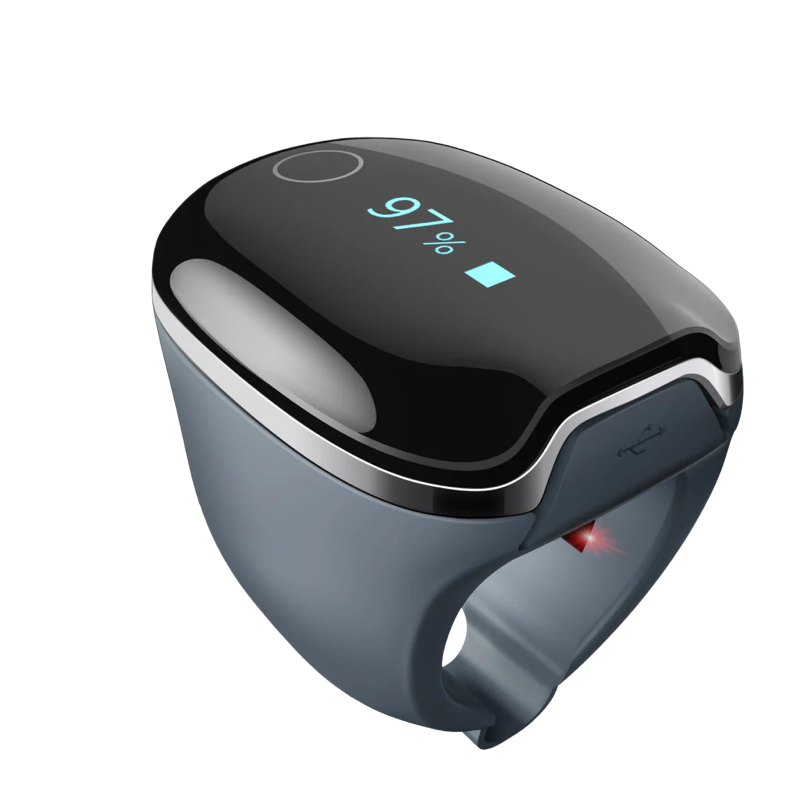
Wellue O2Ring
Works with OxyRemoteThe best overall continuous ring oximeter for overnight oxygen tracking.
Best for: People who want comfortable, well-supported all-night oxygen tracking for snoring or suspected sleep apnea.
- Continuously logs SpO2 and pulse across a full night and stores sessions on-device, so it syncs later instead of staying tethered to your phone
- Built-in OLED screen shows live readings without a phone, and it works with both an app and free PC software for exportable PDF/CSV reports
- Multi-level vibration alert can silently nudge you when oxygen drops — useful overnight without beeping a partner awake
- Lightweight ring is far more comfortable for sleep than a clip-on, and it is well established in the sleep-apnea community
- The adjustable ring still fits only a limited finger-size range, so fit can be hit or miss
- Charges over an older cable and needs daily recharging — a single charge does not span multiple nights
- It is a consumer wellness device, not a diagnostic tool, and its sampling interval is coarser than newer models
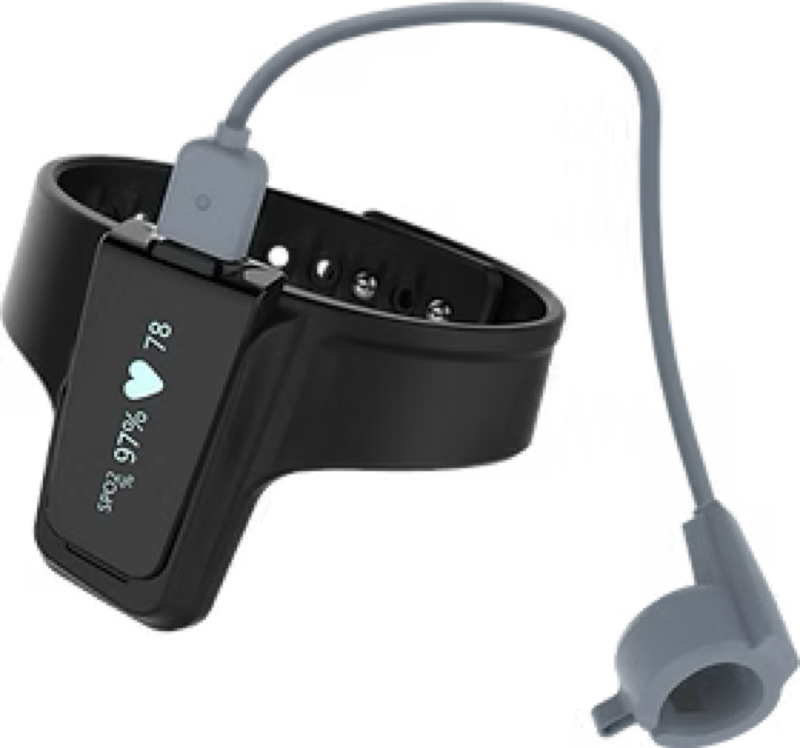
Viatom Checkme O2 Max
Works with OxyRemoteThe best ring-plus-wrist alternative for detailed, multi-night recording.
Best for: Anyone who needs several nights of unattended recording for home sleep-apnea screening or oxygen-therapy tracking.
- Very long multi-day battery life records several nights unattended before recharging — unusual in this class
- Finer sampling and high-resolution storage give more detailed overnight trend data
- Alerts on both low SpO2 and abnormal heart rate, via vibration and an audible alarm, with a wrist display for at-a-glance readings
- Soft ring-style finger sensor is comfortable for overnight wear and widely used for at-home screening
- The two-part wrist-unit-plus-finger-sensor design is bulkier on the hand than an all-in-one ring
- Costs more than a basic ring or fingertip oximeter
- Remains a screening and wellness device, not a substitute for a clinical sleep study
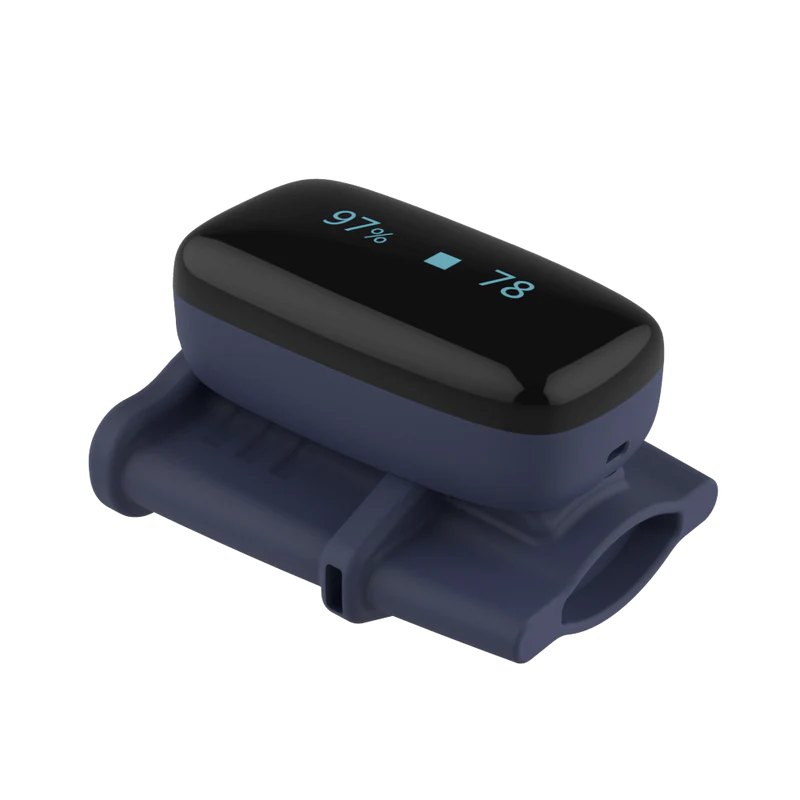
Wellue Oxyfit PO6
Works with OxyRemoteA lightweight, comfortable option for spot-checks and shorter sessions.
Best for: Users who mainly want comfortable spot-checks plus shorter continuous sessions — exercise, daytime, the occasional nap.
- Soft duckbill ring sensor applies far less pressure than a hard fingertip clip — comfortable and cordless
- Handles both instant spot-checks and continuous monitoring, with live SpO2 and pulse on an OLED screen
- Wirelessly sends real-time data to a free iOS/Android app for saving and graphing history
- Audible alarm when SpO2 or pulse fall outside your set limits
- On-device memory holds only short sessions, so it is not built to store a full unattended night like the O2Ring or Checkme
- Uses an audible alarm rather than a silent vibration nudge, which is less sleep-friendly for a partner
- Wellness-grade accuracy, not a diagnostic instrument
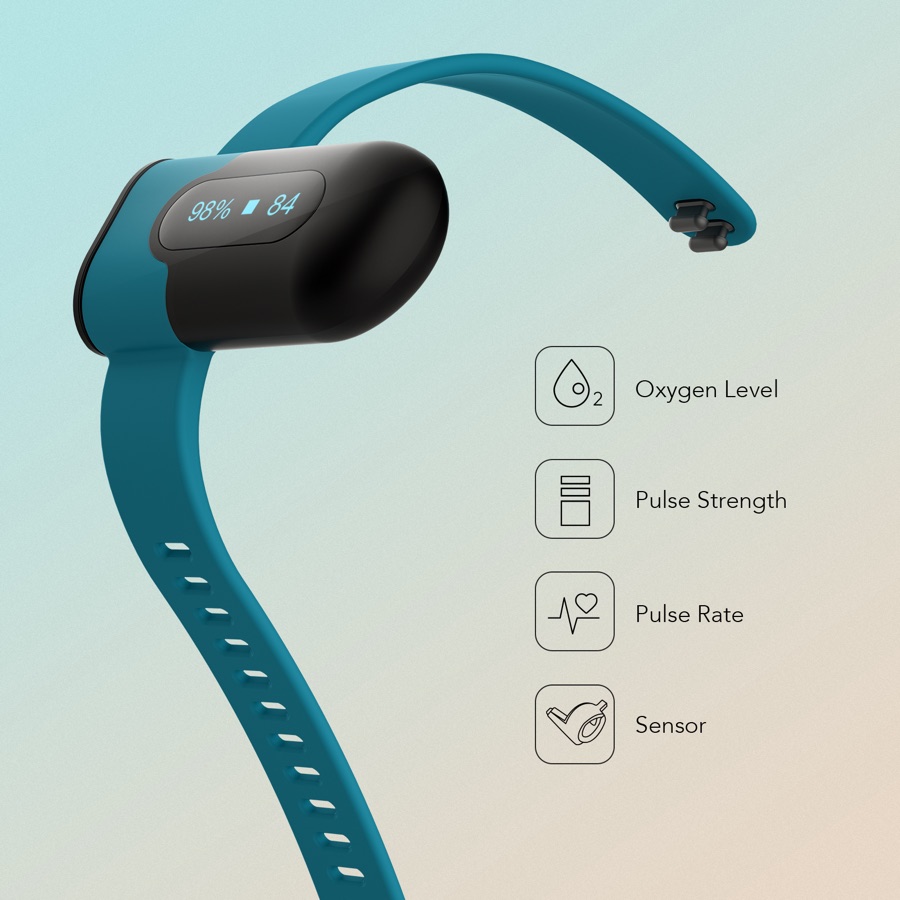
Wellue SleepU
Works with OxyRemoteA secure-fitting wrist sleep oximeter on a budget — comfortable enough to wear all night.
Best for: Budget-conscious users who want reliable all-night tracking and a sensor that won't slip off.
- Continuous overnight recording of SpO2 and pulse with on-device storage and exportable reports
- Soft silicone ring sensor stays put during sleep, and the adjustable wristband keeps it stable
- Vibration in the finger sensor can gently prompt a position change when oxygen falls below a set threshold
- Works with OxyRemote, so a family member can watch the readings live and get a low-oxygen alert
- The two-piece wrist-plus-finger-sensor design is bulkier and less elegant than an all-in-one ring
- An older, coarser sampling interval compared with the Checkme O2 Max
- The finger sensor sits on a short cable rather than being fully self-contained like a ring
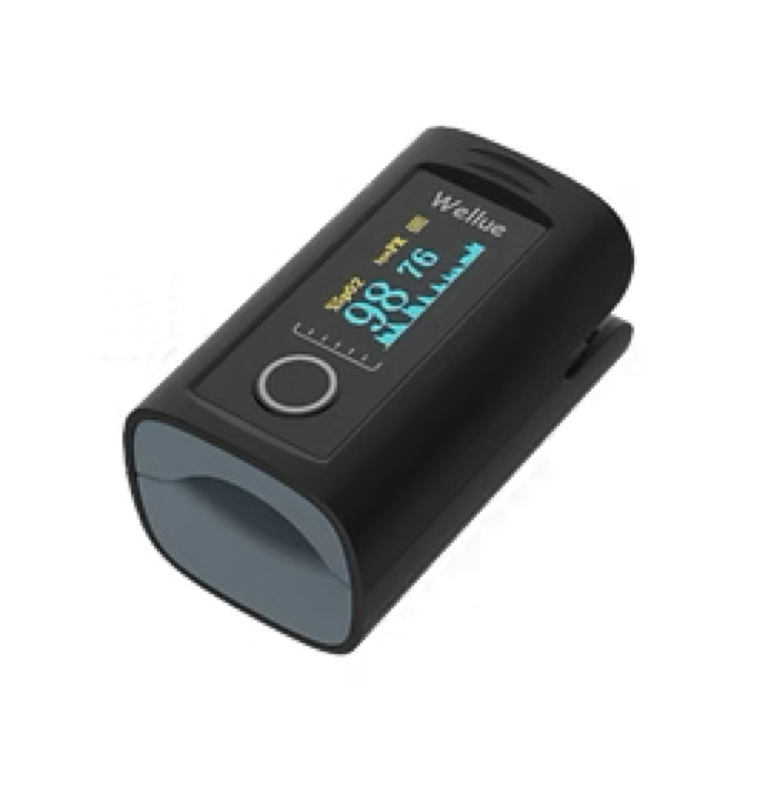
Wellue PF-60
Works with OxyRemoteA Bluetooth fingertip oximeter for instant spot-checks, with a low-oxygen alarm and app sync.
Best for: Quick daytime SpO2 and pulse checks — and short recorded sessions — rather than full overnight monitoring.
- Classic clip-on fingertip design gives an instant reading in seconds — the simplest way to take a spot-check
- Bluetooth syncs readings to the app, so checks are saved and graphed instead of forgotten
- Built-in audible alarm flags an SpO2 or pulse reading outside the limits you set
- Works with OxyRemote, so a reading can be viewed live on a second phone
- A clip is uncomfortable to sleep in, so it is far less suited to all-night recording than a ring or wrist unit
- Fingertip oximeters can read slightly high, and cold hands or movement throw the number off
- Captures moments and short sessions well, but is not designed to store a full unattended night
Which one is right for you
- Overnight, suspected sleep apnea, or following COPD oxygen at home: choose a continuous ring or wrist unit — the Wellue O2Ring, Viatom Checkme O2 Max, or Wellue SleepU. They record all night and nudge you on a dip.
- Quick daytime checks only: the Wellue PF-60 fingertip oximeter is cheap, instant, and enough. You won't get overnight data, and that's fine if you don't need it.
- You want family to watch live and get a low-oxygen alert: pick any OxyRemote-supported device (the O2Ring, Checkme O2 Max, Oxyfit PO6, SleepU, or the Wellue PF-60) and pair it with the app.
If your main goal is overnight peace of mind, the comfort of the sensor matters more than almost anything else — a device you take off at 2 a.m. records nothing. For more on this, see best continuous pulse oximeter overnight and, if a parent is who you're worried about, choosing a pulse oximeter for an elderly parent.
Letting someone else watch the readings
On their own, all of these devices show readings on the wearer's own phone (or the unit's screen). That's perfect when you're checking yourself, but it doesn't help a family member in another room or another city.
This is the gap OxyRemote is built to fill. The wearer's phone stays paired to a supported oximeter and relays the readings over the internet, so a second person can watch live and receive a push alert when oxygen drops below a level you set. It works with the supported devices above (the O2Ring, Checkme O2 Max, Oxyfit PO6, SleepU, and the Wellue PF-60). Here's how remote viewing works.
The pairing most buyers actually want
A comfortable continuous ring for the data, plus a live second viewer and low-oxygen alerts so someone else doesn't have to sit and stare at a screen. The device handles the measuring; the app handles the watching and the alerting.
Frequently asked questions
Do I need Bluetooth? Only if you want to save, graph, or share your readings, or get app-based alerts. A non-Bluetooth oximeter shows a number and forgets it. If you care about trends over time or about anyone else seeing the data, Bluetooth is the feature that makes that possible.
Continuous or fingertip? If you want to track oxygen overnight or follow it for sleep apnea or COPD, choose continuous — a ring or wrist unit you can comfortably wear for hours. If you just want an occasional daytime number, a fingertip device is simpler and cheaper. See continuous vs fingertip explained.
Can two people see it at the same time? Not from the device alone — it pairs with one phone. To let a family member follow along live and get alerted on a dip, you'd add a relay app like OxyRemote on a supported oximeter. The full setup is covered in view your readings on two phones.
Important
Consumer pulse oximeters are awareness and screening tools, not medical diagnostic devices. They can flag a pattern worth discussing with a clinician, but they cannot diagnose a condition. Never change prescribed therapy — supplemental oxygen, CPAP pressure, or any medication — based on home readings. If you're worried about a reading or your symptoms, contact a healthcare professional.
A note on accuracy and trust: home oximeters vary, and readings can be thrown off by cold fingers, movement, nail polish, or poor fit. Treat trends across a session as more meaningful than any single number, and learn what a normal range looks like in what is a normal SpO2 reading and are pulse oximeters accurate.
Finally, a disclosure: prices, models, and availability change often, so check current listings before buying, and the device links on this page are affiliate links — if you buy through them we may earn a small commission at no extra cost to you. We only recommend devices we believe are genuinely useful, and we've tried to name each one's real trade-offs alongside its strengths.
The Wellue O2Ring
A continuous, comfortable Bluetooth ring that records oxygen all night — and the device OxyRemote is built to work with.
Find the Wellue O2Ring on AmazonAs an Amazon Associate, OxyRemote earns from qualifying purchases — at no extra cost to you.
Watch over them from anywhere
OxyRemote streams live SpO₂ and heart rate to your phone, with custom alerts — using a supported Bluetooth pulse oximeter.
Download on the App Store