Using a Pulse Oximeter with CPAP: Is Your Therapy Actually Working?
See their oxygen live on your phone — from anywhere. OxyRemote streams readings with instant low‑oxygen alerts for Wellue, O2Ring & Viatom oximeters, so you don't have to be in the room to keep watch.
Download on the App StoreSome links below are affiliate links. As an Amazon Associate, OxyRemote earns from qualifying purchases at no extra cost to you. Picks and opinions are our own.
If you use CPAP for sleep apnea, you have probably seen the numbers your machine reports each morning: hours used, mask seal, and an AHI score counting the breathing events it detected. Those numbers feel reassuring. But there is one thing your CPAP machine does not measure at all, and it happens to be the thing the therapy is meant to protect: the oxygen level in your blood.
This guide explains why machine data is not the same as your overnight oxygen, what a healthy versus a concerning oxygen trace looks like on CPAP, and how a simple recording pulse oximeter worn through the night lets you actually verify your therapy is doing its job.
Why your CPAP numbers are not your oxygen
CPAP works by gently splinting your airway open with a stream of pressurized air, so it does not collapse and interrupt your breathing while you sleep. It is a good, well-proven treatment. But the machine infers what is happening from airflow and pressure inside the hose and mask. It estimates how many apneas and hypopneas it stopped. It does not have a sensor on your body reading the oxygen saturation of your blood.
That gap matters because AHI and SpO2 can disagree. You can have a low AHI on the report yet still see your oxygen dip during the night, and a comfortable-looking compliance number tells you nothing about how deep or how frequent those dips are.
Two different questions
Your CPAP answers "how many breathing events did I detect and stop?" A pulse oximeter answers "did my blood oxygen actually stay up all night?" You want both answers, not just the first.
A pulse oximeter is a small, non-invasive device that measures the percentage of your hemoglobin carrying oxygen, your SpO2. A recording model worn overnight logs that value continuously, building a picture of how your oxygen behaved hour by hour, including the brief dips a single daytime spot-check would never catch. For more on the underlying condition, see our guide on using a pulse oximeter for sleep apnea.
What a good (and a concerning) overnight trace looks like
When CPAP is working well, an overnight oxygen recording tends to look like a fairly flat, stable line sitting in the healthy range, with few or no sharp drops. That is the reassuring picture: the therapy is keeping your airway open, so your oxygen is not repeatedly falling and recovering.
A concerning trace looks different. Instead of a flat line you see a sawtooth pattern, repeated dips where oxygen falls and then climbs back up, often clustered in certain parts of the night. Each of those dips is a desaturation, a moment your oxygen fell below where it should be. Seeing them despite using CPAP is exactly the kind of signal worth bringing to the people who manage your therapy.
What counts as a normal baseline varies from person to person, and dipping low does not by itself mean anything is wrong. If you are unsure what range is healthy, our explainers on what a normal SpO2 reading is and what oxygen level is too low give the general thresholds clinicians use. The point of an overnight trace is not to self-diagnose from one number, it is to spot a pattern worth a professional's eyes.
Common reasons oxygen still dips on CPAP
If a recording shows desaturations even with CPAP running, there are several well-known explanations a sleep doctor or your DME (durable medical equipment) provider will consider:
- Pressure set too low to fully hold the airway open, especially during deep or REM sleep when muscles relax most
- Mask leaks that let pressure escape, so the airway is not actually being splinted the way the report assumes
- Mouth breathing on a nasal mask, which lets pressurized air bypass the airway instead of holding it open
- Position-related events, where oxygen drops mainly when you sleep on your back
- REM-related dips, since breathing is most irregular during REM and apneas can break through
- Central events, where the brain briefly stops sending the signal to breathe, which pressure alone does not fix
These are common, fixable issues, and the desaturations themselves are often heaviest during certain sleep stages or positions. Our deeper look at why SpO2 drops during sleep walks through these patterns in more detail.
Do not adjust your therapy yourself
An overnight oxygen recording is information to share, not a reason to change your settings. Never raise your CPAP pressure, change your machine's settings, or alter prescribed oxygen on your own based on home readings. Bring the data to your sleep doctor or DME provider and let them interpret it and make any changes.
What to do with the data
The practical workflow is simple. Wear a recording oximeter for a few representative nights, export the report (most apps produce a PDF or CSV with the SpO2 trend and the dips marked), and take it to the appointment where your CPAP is reviewed. Pair it with the same nights' machine data if you can. A clinician looking at both the AHI and the actual oxygen trace has a far clearer picture than either alone. For practical setup tips, see our guide to overnight oxygen monitoring at home.
A comfortable device for all-night CPAP verification
For overnight use alongside CPAP you want a device that records continuously all night, is comfortable enough to actually keep on, and produces a report you can share. A clip-on fingertip unit is fine for a quick daytime check but miserable to sleep in and not built to log a full night. A ring-style recorder is the comfortable, purpose-built option.
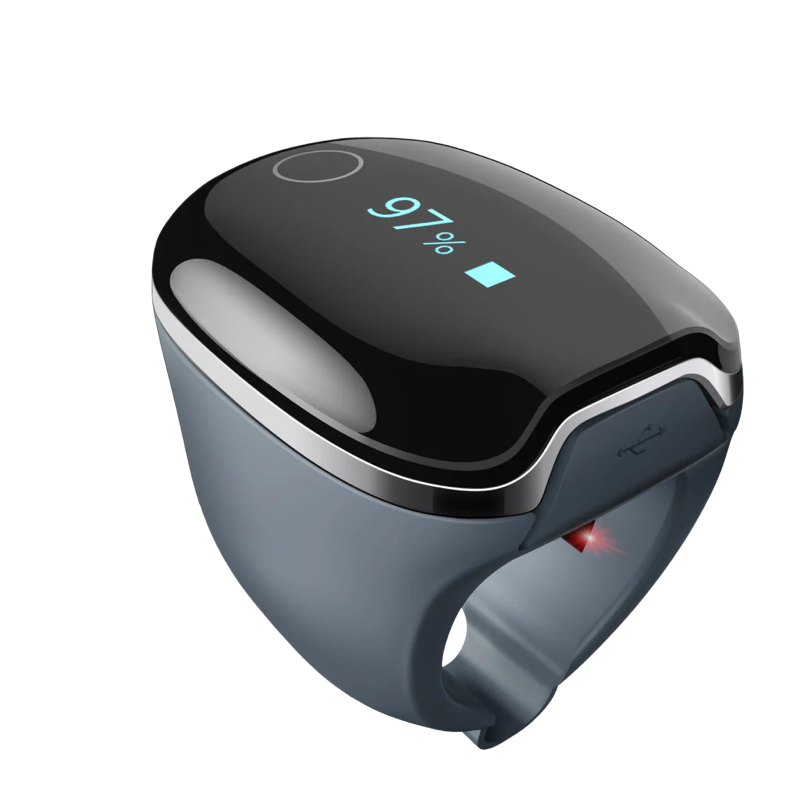
Wellue O2Ring
Works with OxyRemoteA comfortable, well-established ring that records SpO2 and heart rate continuously through the night and stores the session on-device, then syncs to the app for an exportable report you can hand to your sleep clinic.
Best for: CPAP users who want comfortable, all-night oxygen verification with a proven app and report ecosystem.
- Logs SpO2 and pulse continuously across a full night and stores the session on-device, so it syncs later without staying tethered to your phone
- Lightweight ring is far more comfortable to sleep in than a clip-on fingertip unit
- Silent vibration nudge can alert you to a drop without beeping a partner awake
- Works with the ViHealth app and free PC software for exportable PDF/CSV reports to share with your doctor
- The adjustable ring still fits only a limited finger-size range, so fit can be hit or miss
- Charges over an older cable style and needs recharging since a single charge does not span multiple nights
- A consumer wellness device, not a diagnostic tool, with a coarser sampling interval than newer models
If you want longer unattended battery for recording several nights in a row, the Viatom Checkme O2 Max is worth comparing. For a broader buyer's view, see our best Bluetooth pulse oximeter and continuous overnight oximeter roundups.
Verifying a parent's CPAP from another room or another home
Many people reading this are not checking their own CPAP, they are worried about an older parent who lives alone or down the hall and is newly on therapy. The hard part is that a recorded report only tells you what happened after the night is over. If you want to know in the moment that oxygen is holding while they sleep, you need a live second viewer.
That is the gap OxyRemote fills. The wearer keeps a supported Bluetooth oximeter (like the O2Ring) paired to their own phone, and that phone relays the live readings over the internet to yours. You can watch the same numbers from another room or another city, and set a custom low-oxygen alert that pushes to your phone if their SpO2 falls below a threshold you choose, so you are not staring at a screen all night.
This is purely for peace of mind and awareness, not for changing anyone's prescribed therapy from afar. If remote monitoring of an older parent is your situation, our guides on monitoring an elderly parent's oxygen remotely and choosing a pulse oximeter for an elderly parent go deeper.
The realistic expectation
A good outcome here is often reassurance: many nights of recording will simply show that CPAP is keeping oxygen stable, which is genuinely useful to confirm. If it instead reveals dips, you have caught something concrete to fix with your care team rather than a vague worry.
A note on what these devices are and are not
Consumer pulse oximeters, including the ring recorders described here, are wellness and awareness tools, not diagnostic medical devices. They can show you trends and flag patterns worth investigating, but they cannot diagnose sleep apnea, replace a clinical sleep study, or tell you whether your CPAP pressure is correct. Readings can also be affected by movement, poor fit, cold hands, nail polish, and skin tone, so treat any single number with healthy skepticism and look at the overall pattern instead. Never change your CPAP pressure, machine settings, or any prescribed oxygen therapy based on home readings. If your overnight oxygen consistently dips, you feel unwell, breathless, or excessively tired despite using CPAP, or you have any concern about your therapy, share your recordings with your sleep doctor or DME provider and follow their guidance. In a medical emergency, call your local emergency number.
Watch over them from anywhere
OxyRemote streams live SpO₂ and heart rate to your phone, with custom alerts — using a supported Bluetooth pulse oximeter.
Download on the App Store